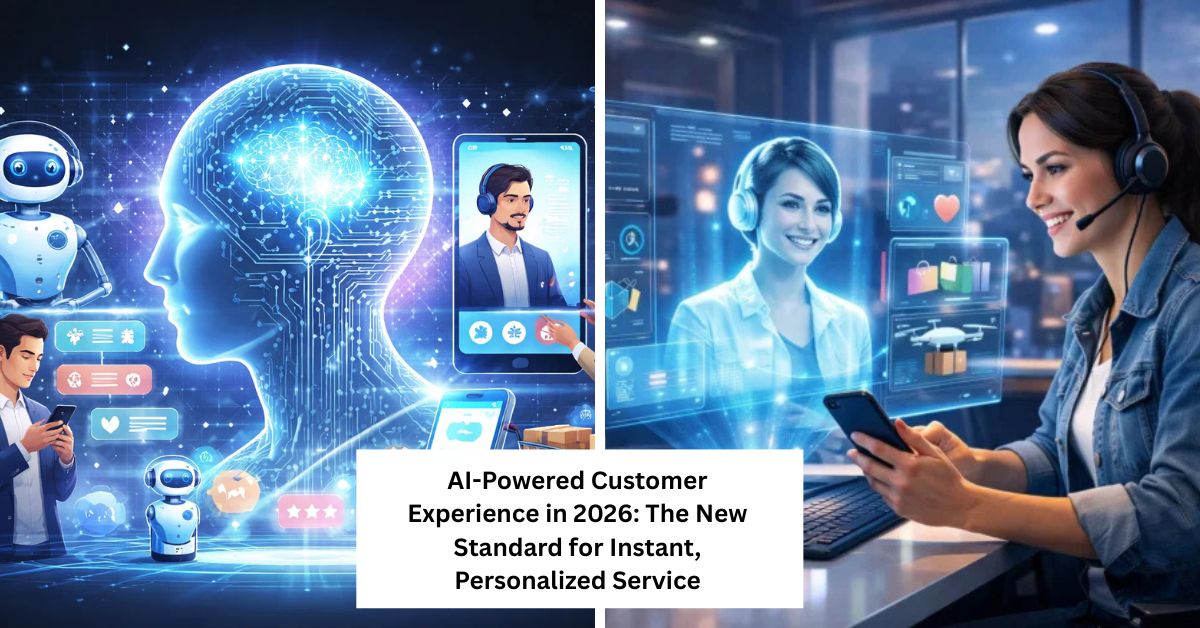
In 2026, the landscape of customer experience (CX) is being radically reshaped by the pervasive influence of artificial intelligence (AI). This article delves into how AI-powered solutions are not just enhancing customer interactions, but also setting a new standard for how businesses engage with their clientele. We will explore the transformative impact of AI in CX, examining its benefits, applications, and the challenges that come with its implementation.
Why AI Is Reshaping Customer Experience

Advertisement
The evolution of customer expectations in the digital age
The digital age has significantly altered customer expectations. Customers now demand seamless, instant access to information and services.
This surge in demand has been fueled by the ubiquity of smartphones and high-speed internet, making it necessary for businesses to enhance their customer experience and communication strategies. These evolving expectations are forcing businesses to re-evaluate their approach to customer care.
How instant, personalized service has become a baseline expectation
Instant, personalized service has evolved from being a value-added service to a baseline expectation. Customers now expect businesses to anticipate their needs and offer tailored solutions in real time.
This demand for personalized service is driving the adoption of AI-powered technologies that can analyze customer behavior and provide insights into customer preferences, enabling businesses to personalize interactions at scale.
The competitive edge of AI-powered CX for businesses in 2026
In 2026, AI-powered customer experience is a key differentiator in a competitive market. Businesses that use AI to personalize customer interactions and anticipate customer needs gain a significant advantage.
The future of customer experience relies on the ability of businesses to leverage AI for improved customer engagement and to set a new standard for exceptional customer service, resulting in improved customer lifetime value.
Understanding AI-Powered Customer Experience

Advertisement
Definition and key components of AI-driven CX
AI-driven customer experience refers to the strategic implementation of AI technologies to enhance and personalize every customer interaction across all touchpoints.
Key components of AI-driven CX include the use of AI to automate processes, personalize customer journeys, and provide real-time support. The core goal is to improve customer satisfaction and build stronger customer relationships through data-driven insights.
Core technologies enabling AI personalization: machine learning, NLP, predictive analytics
Several core technologies are essential for enabling AI personalization in customer experience. Machine learning algorithms analyze customer behavior to predict future actions and preferences.
Natural Language Processing (NLP) allows AI systems to understand and respond to customer queries in a human-like manner. Predictive analytics uses historical data to anticipate customer needs and proactively address potential issues, thus setting a new standard for customer experience.
Examples of AI transforming CX across industries
AI is In retail, recommendation engines powered by AI personalize product suggestions. In healthcare, chatbots offer instant support and,
In finance, AI analyzes customer data to detect fraudulent activities and provide personalized financial advice.
Benefits of AI-Powered CX

Advertisement
Instant responses and 24/7 support with chatbots and virtual assistants
One of the most significant benefits of AI-powered customer experience is the ability to provide instant responses and 24/7 support through chatbots and virtual assistants. These AI systems can handle a high volume of customer interactions, addressing common queries and issues without the need for human agents. This ensures that customers receive immediate assistance, regardless.
Hyper-personalization of customer journeys and recommendations
AI enables hyper-personalization of customer journeys and recommendations by analyzing customer behavior and preferences. AI-driven systems can use insights into customer data to tailor product suggestions, content, and .
This level of personalization enhances customer engagement, fosters customer loyalty, and drives customer retention,

Advertisement
Predictive insights: anticipating customer needs before they arise
AI provides predictive insights that allow businesses to anticipate customer needs before they arise. By analyzing customer data and identifying patterns, AI-powered tools can predict potential issues.
This proactive approach enhances customer trust and fosters stronger customer relationships. Predictive support is transforming the customer experience landscape, ensuring that customers feel valued and understood.
Operational efficiency: cost savings and streamlined processes
AI significantly improves operational efficiency by automating repetitive tasks and streamlining processes. AI driven automation reduces the workload on human agents, allowing them to focus on more complex issues.
Key Applications of AI in Customer Experience

Advertisement
Customer service automation: chatbots, voice assistants, and ticketing systems
Customer service automation is a key application of AI in customer experience. Chatbots and voice assistants can handle a large volume of customer inquiries, providing instant support and resolving common issues.
AI-powered ticketing systems streamline the process of managing and resolving customer complaints, ensuring that no customer issue is overlooked.
Recommendation engines for personalized products, content, and promotions
Recommendation engines powered by AI personalize product suggestions, content, and promotions based on customer behavior and preferences.
These engines analyze customer data to identify products or content that are most relevant to individual customers, increasing the likelihood of a purchase or engagement. Personalized recommendations enhance customer satisfaction and drive customer retention, setting a new standard for customer engagement.

Advertisement
Sentiment analysis: real-time understanding of customer emotions and feedback
Sentiment analysis is crucial for understanding customer emotions and feedback in real time. AI-powered tools analyze customer interactions, such as social media posts, reviews, and survey responses, to gauge customer sentiment.
This information allows businesses to quickly identify and address negative feedback, improve customer satisfaction, and enhance the overall customer experience. Real-time insights into customer sentiment is critical to successful customer engagement.
Predictive support: resolving potential issues proactively
Predictive support involves using AI to anticipate potential customer issues and proactively offer solutions. By analyzing customer data and identifying patterns, AI-powered systems can detect early warning signs of customer dissatisfaction or technical problems.
This allows businesses to address these issues before they escalate, enhancing customer trust and preventing customer churn. The future of customer experience depends on predictive support.
AI-driven marketing: dynamic campaigns and hyper-targeted engagement
AI-driven marketing enables the creation of dynamic campaigns and hyper-targeted customer engagement. AI analyzes customer data to identify the most effective marketing channels and messages for individual customers.
This level of personalization increases the effectiveness of marketing campaigns, driving customer acquisition and retention. AI-driven marketing sets a new standard for customer communication and enhances customer lifetime value.
Personalization and Engagement: The Human-AI Hybrid Approach

Advertisement
Tailoring experiences based on behavior, preferences, and purchase history
Tailoring experiences based on behavior, preferences, and purchase history is now achievable with advanced AI. AI-powered systems analyze customer data to personalize every customer interaction. Businesses use AI to customize offers and content, improving customer engagement and customer retention. This level of personalization sets a new standard for customer experience, boosting customer loyalty and satisfaction.
Real-time adaptation to changing customer needs
Real-time adaptation to changing customer needs is a critical component of AI-driven customer experience. AI systems monitor customer behavior in real time, adjusting offers and communication to align with immediate customer needs.
This ensures a seamless and relevant experience, building customer trust and loyalty. The future of customer experience relies on this dynamic approach.
Balancing AI efficiency with human empathy to build trust and loyalty
Balancing AI efficiency with human empathy is essential to build customer trust and loyalty. While AI can automate many processes, human customer service agents provide the emotional intelligence and understanding that AI lacks.
The optimal approach combines the strengths of AI and humans, ensuring every customer interaction feels both efficient and empathetic. This ensures improved customer satisfaction.
Challenges and Considerations for Implementing AI-Powered CX

Advertisement
Avoiding over-reliance on AI and ensuring human touch where needed
Avoiding over reliance on AI and ensuring the human touch remains a key consideration. While AI-driven customer experience offers numerous benefits, it’s important to recognize that not all interactions can or should be fully automated.
Certain situations require human empathy and understanding, meaning improved customer care can be achieved. Balancing automation with human interaction is crucial for building customer trust.
Data privacy, ethical AI, and regulatory compliance
Data privacy, ethical AI, and regulatory compliance are critical challenges in implementing AI powered CX. Businesses must ensure that their using AI practices adhere to all relevant data protection laws. Transparency in how customer data is collected and used is essential for maintaining customer trust. Ethical considerations must guide the development and deployment of AI models.

Advertisement
Integration with legacy systems and ensuring cross-channel consistency
Integrating AI with legacy systems and ensuring cross-channel consistency can be complex. Many organizations have existing technology infrastructures that are not easily compatible with AI-driven tools. This requires careful planning and execution to ensure seamless integration and avoid disruptions to customer experience. Every customer interaction should reflect customer communication.
Training teams to collaborate effectively with AI-driven tools
Training teams to collaborate effectively with AI-driven customer experience tools is crucial for successful implementation. Customer service agents need to understand how to use AI tools to enhance their productivity and improve customer interactions. Training should focus on developing the skills needed to work alongside AI systems, setting a new standard for efficiency and customer satisfaction.
Steps to Implement AI-Powered Customer Experience Successfully
Identifying business goals and CX pain points
The first step in successfully implementing AI powered customer experience is to clearly identify your business goals and understand existing customer experience pain points. Pinpointing areas where AI can provide the most significant impact is crucial.
Define specific metrics for success, such as improved customer satisfaction scores or reduced resolution times, to set a new standard. Understanding these will help set the stage for effective use of AI to improve customer interactions.